Understanding Safari Accommodation Options
“Lodge” and “camp” are loosely used words. A plain-English guide to the main types of safari accommodation, why location matters more than décor, and what to ask about meals, inclusions and comfort.
In this guide 12 sections
“Lodge” and “camp” are two of the most loosely used words in safari travel. A lodge might be a handful of cottages or a hundred rooms; a camp might have canvas walls and a bucket shower or a four-poster bed and a private plunge pool. The labels tell you less than the details, so this guide explains what the main types usually mean and what to ask before you choose.
The main kinds of places to stay
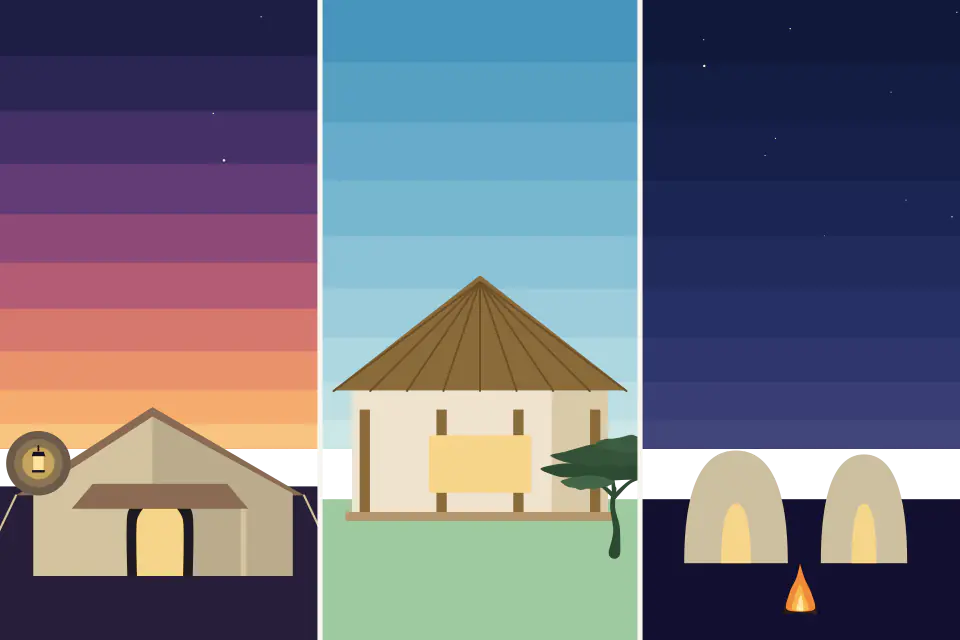
Permanent tented camps
Canvas tents on raised platforms, usually with en-suite bathrooms, proper beds and a veranda. They put you close to the sounds and smells of the bush without giving up comfort, and they range from simple to opulent. Walls are thin, so you hear what lives outside.
Lodges
Built from stone, timber and thatch, lodges generally have solid walls, larger public areas and a wider range of facilities. They tend to suit travellers who value space, a pool, or a restaurant with several tables rather than one communal one. Size varies enormously, so ask how many rooms there are.
Mobile and seasonal camps
Set up in a favoured area for part of the year and then moved, these camps are small and close to the action. Facilities are simpler than in permanent properties, although some are far from basic. Showers, power and layout differ, so ask for details.
Conservancy camps and small private properties
Often limited to a few tents or cottages, these are typically found on private land bordering a reserve. They can offer quieter sightings and a more flexible schedule, with activities that vary by property. Rules differ between conservancies and can change, so confirm them with the camp.
Budget camps and campsites
Basic campsites and simpler lodges make safari more accessible and can be a good choice for independent or younger travellers. Check what equipment is supplied, how meals work and what facilities exist, because standards vary widely.
Location matters more than décor
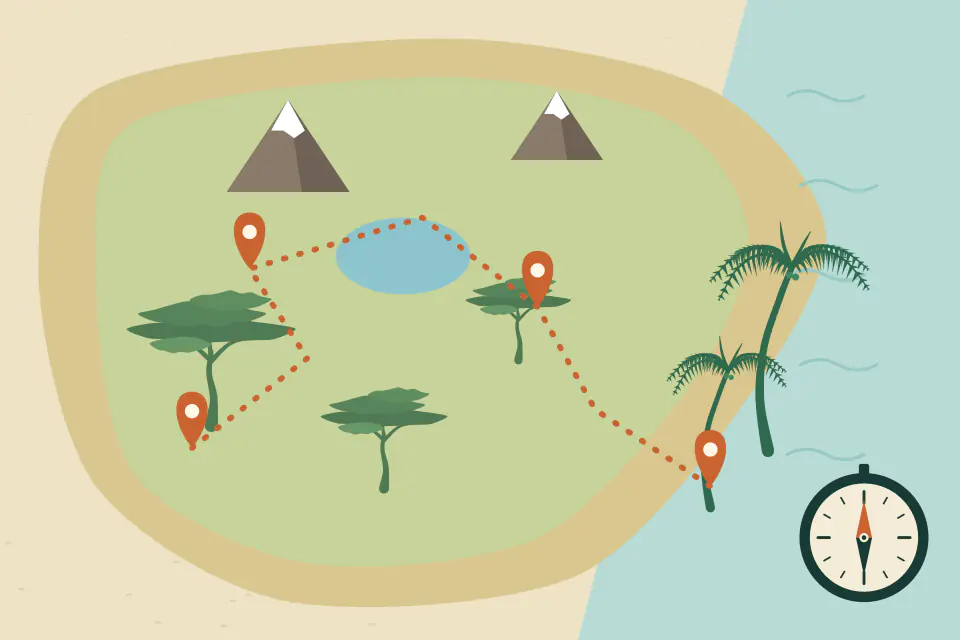
Where a camp sits shapes your days more than any chandelier. A property inside a park or reserve gives you early light and short transfers, but you share it with other vehicles. One just outside the boundary may have a lower price and a quieter setting, although you will spend part of each morning reaching the gate. A camp on a river or waterhole can offer wildlife you watch from the veranda. Ask how far the camp is from the areas you most want to visit, and whether it is fenced.
What “full board” and “all inclusive” might mean
These terms are used inconsistently, so ask for a written list covering:
- meals, and whether packed lunches or bush breakfasts are included;
- drinks, and which ones;
- game drives and other activities, and how many;
- park or conservancy fees, and whether they are paid by you or by the camp;
- laundry and transfers;
- airstrip or road pick-ups.
Anything not on the list should be treated as an extra.
Comfort details worth asking about
- Power and charging: many camps run on solar power or generators, so charging can be limited to certain hours.
- Connectivity: Wi-Fi may be available in common areas only, or not at all.
- Hot water and showers: timing and supply vary.
- Mosquito protection: find out what is provided and what you should bring.
- Accessibility: check steps, paths and distances if mobility is a consideration.
- Children and dietary needs: policies and menus differ, so confirm them in advance.
If a family is travelling, our family travel guide goes further on child-friendly choices.
Group size and atmosphere
A small camp can feel like staying with friends, with shared tables, evening fires and guides who join you for dinner. A larger lodge offers more independence and a little more anonymity. Neither is wrong, but a mismatch is memorable for the wrong reasons: a private couple at a communal table, or a lively family in a place built for hush. Ask how many guests the property hosts at once, whether dinners are shared or private, and whether there are quiet hours. If you want a private table or an in-room dinner for a special evening, ask early.
Choose in the right order
- Decide the region and the rough number of nights.
- Pick the position that suits your priorities, such as river views, quiet sightings or short transfers.
- Choose the style of property that fits your group.
- Only then compare comfort details and inclusions.
Working in this order stops a beautiful room in the wrong place from deciding the whole trip. Our first-time planning guide follows a similar sequence for the trip as a whole.
Matching style to traveller
Couples who want romance and privacy often prefer small, secluded properties. Photographers may value flexible schedules and a good position. First-timers usually do best with a well-run, mid-sized place with attentive staff. Honeymooners, families and friends travelling together may want different layouts altogether. There is no universal best, only the one that suits your group.
Seasons can also affect availability, and some properties close for part of the year. When you are ready to compare options, tell us about your trip, or see how accommodation fits a journey such as the 3-day Maasai Mara safari.