
A First-Time Traveller’s Guide to Planning a Kenya Safari
Six decisions, taken in a sensible order, turn a vague idea of a safari into a plan: who is travelling, which region, how many nights, how you travel, what to expect and when to book.
In this guide 7 sections
Most first safari plans start the same way: a few photographs saved on a phone, a rough idea of the month, and no clear sense of where to begin. This guide turns that jumble into six decisions, taken in an order that makes each one easier than the one before.
Start with who is travelling
The most useful question is not “where?” but “who?”. A couple marking an anniversary, a family with a seven-year-old, three friends who want to be outdoors from first light to last, and a solo traveller who would like company on the drives are planning four quite different trips.
Write down what matters most, whether that is big cats, unhurried mornings, photography, comfort or a few days on the coast afterwards. Then add one thing you would be sorry to miss and one thing you genuinely do not care about. A planner can do a great deal with those two lines.
Choose a region by temperament, not fame
Kenya’s safari areas are not interchangeable, and the best-known name is not automatically the best fit for you.
- Maasai Mara: wide grassland where predators may be seen hunting and resting, although popular sightings can draw several vehicles. Our Maasai Mara planning guide goes into detail.
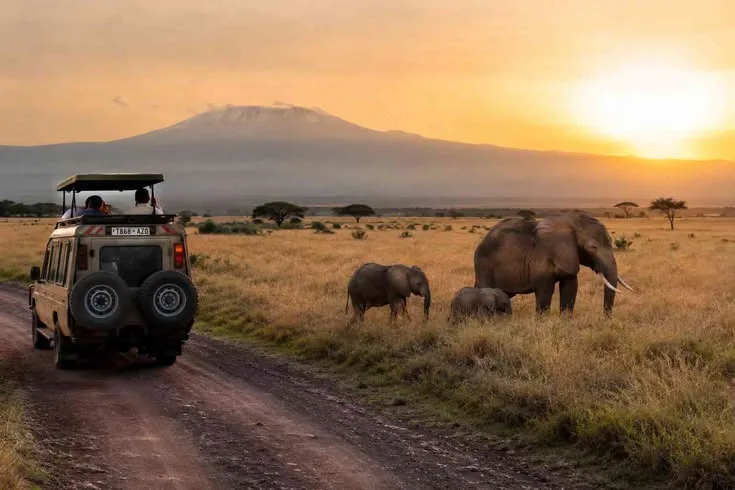
- Amboseli: open plains, elephant herds and, when cloud allows, Mount Kilimanjaro rising behind them.
- Tsavo East and Tsavo West: big, wilder country with red earth and long horizons, where distances are greater and the pace is slower.
- Samburu: dry northern landscapes and species adapted to them, a noticeably different Kenya from the southern parks.
- Lake Nakuru and Lake Naivasha: lakes, birdlife and Rift Valley scenery, often combined with Hell’s Gate for a more active few days.
Each has its own page in our destinations directory, with notes on access and seasons.
Count nights, not days
Two nights is the shortest stay that justifies the journey to most parks, and three lets you settle into the rhythm of the place. Anything shorter and the trip becomes a series of transfers. For a first safari of about a week, two bases usually work better than four, leaving room for a slow breakfast and an unplanned extra hour at a good sighting.
If you want beach time as well, treat it as a separate chapter rather than an afterthought. The 6-day Kenya safari and beach holiday shows one way to shape that, and our guide to planning a multi-destination holiday explains the logistics.
Picture an ordinary safari day
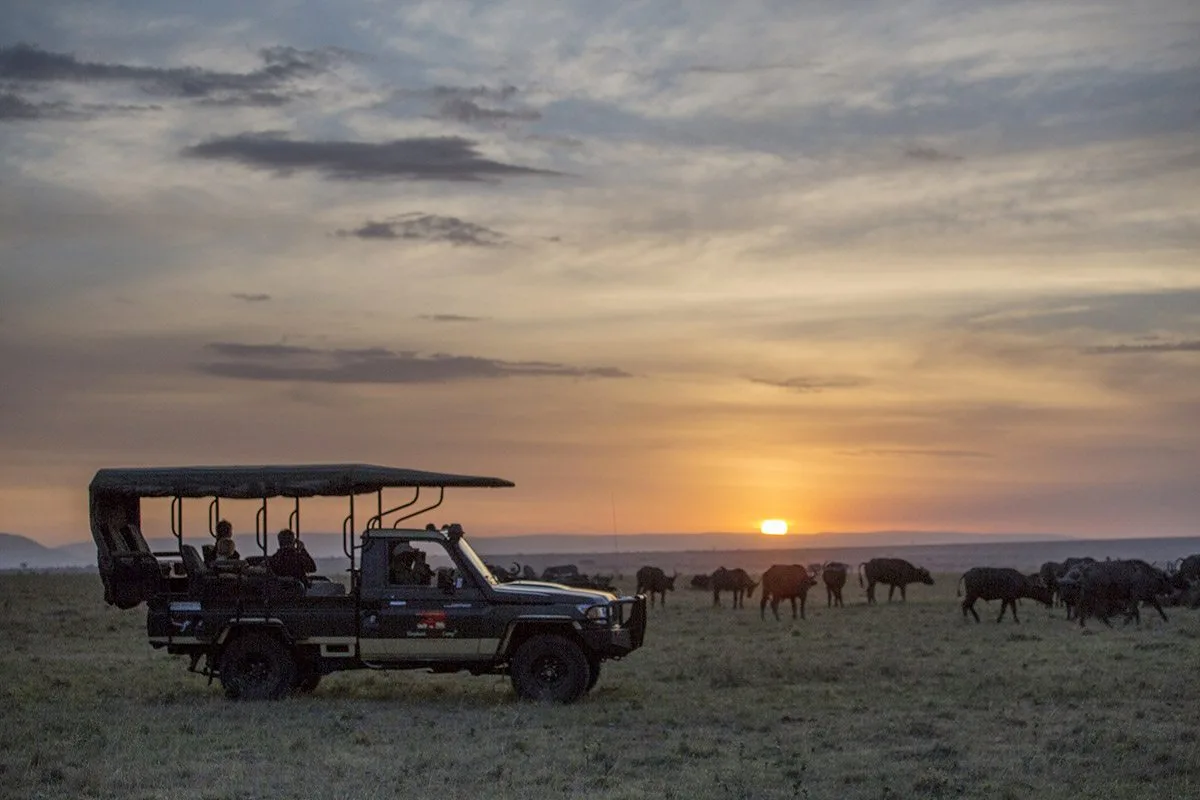
Days are built around the light and the animals’ own rhythms. You leave early, while the air is cool and activity is high, and drive for a few hours before returning for breakfast. Midday is for rest, because heat quietens both wildlife and travellers. A second drive follows in the softer afternoon light. Most parks ask vehicles to be out by dusk, although some private conservancies operate under different rules.
What happens in between is not scheduled by anyone. A morning can pass with little more than antelope and birds, and then a pair of lions appears beside the track. That unevenness is part of the appeal, and a good guide makes the quiet stretches interesting too.
Private or shared vehicle?
A shared vehicle suits travellers who are happy to follow a set schedule and split the cost of a driver-guide. A private vehicle lets you decide when to leave, how long to stay at a sighting and when to stop for a photograph, which matters to photographers, families and anyone who prefers to go slowly. Whichever you choose, ask how many seats there are and whether every guest has a window seat.
Several things shape the overall cost of a safari, and it helps to know them when you compare quotations:
- the season you travel in;
- the style of camp or lodge;
- whether the vehicle is private or shared;
- whether you travel by road or by light aircraft;
- the number of nights and the number of bases;
- park or conservancy fees, which are set by the authorities concerned and can change.
Ask for a written quotation that states exactly what is and is not included.
Keep expectations honest
No operator can guarantee a particular sighting, and you should be wary of anyone who tries. What you can influence is the quality of the guide, the pace of the trip and how many hours you spend where wildlife is most likely to be active. Ask about your guide’s experience, languages and special interests, whether that is birds, tracking or photography. A good guide is the best predictor of a satisfying safari.
Book early enough to do it properly
Small camps fill up first, especially in the busier seasons, so start planning well ahead. Our guide to when to visit Kenya explains how the seasons affect a trip, Kenya travel requirements covers the documents and health preparation to check, what to pack will keep your luggage light, and Kenya travel tips covers etiquette, money and staying connected.
When you are ready to turn these ideas into an itinerary, tell us about your trip or browse our tours for starting points.