5-Day Amboseli and Tsavo Safari
Combine the open landscapes of Amboseli with the varied wilderness of Tsavo on a multi-day safari through two distinctive Kenyan safari regions.
Southern Kenya
Wide plains, elephant herds and Kilimanjaro on the horizon when the clouds part.
Overview
Open plains, swamps and elephant country at the foot of Mount Kilimanjaro, with views of Africa's highest mountain when the weather allows.
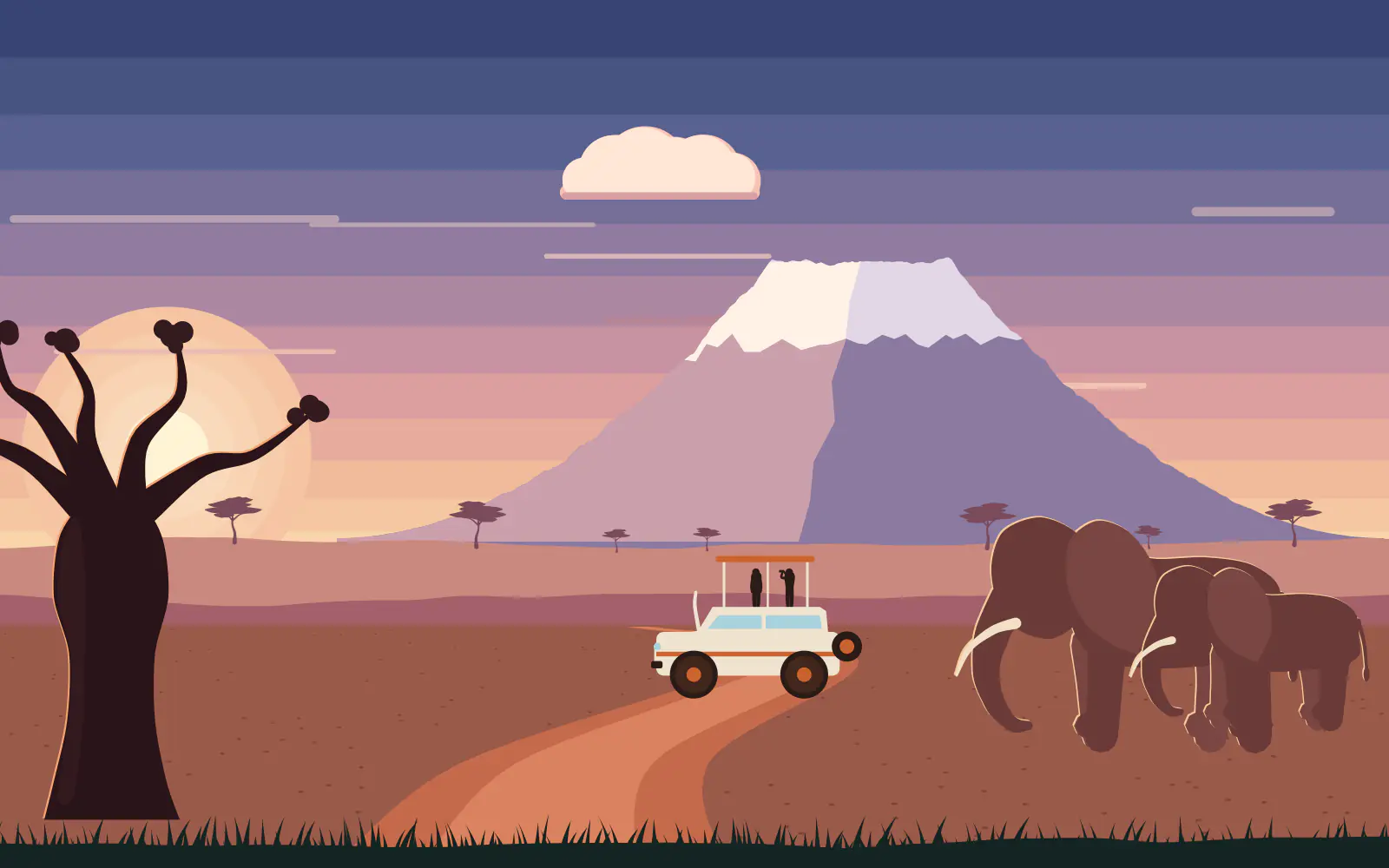
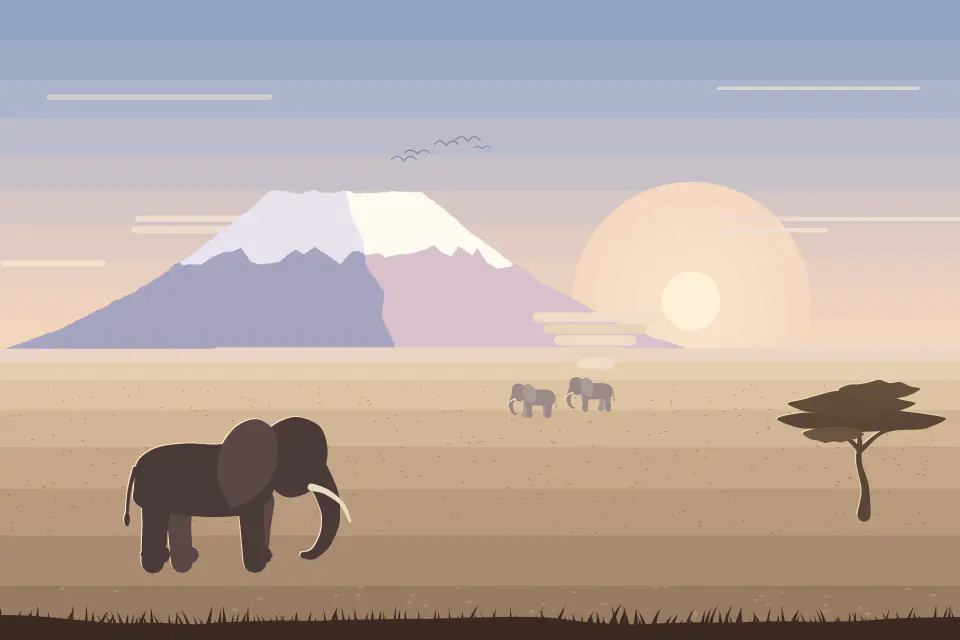
Amboseli National Park lies in southern Kenya, not far from the Tanzanian border, in a flat and open basin where one feature draws the eye above all others. Mount Kilimanjaro, the highest mountain in Africa, stands just across the border, yet from Amboseli it appears to rise straight out of the plains. Whether you see it depends entirely on the weather. Cloud often gathers around the summit as the day warms, so early mornings and late afternoons usually offer the clearest chances, and a day without the view is still a day spent in remarkable elephant country.
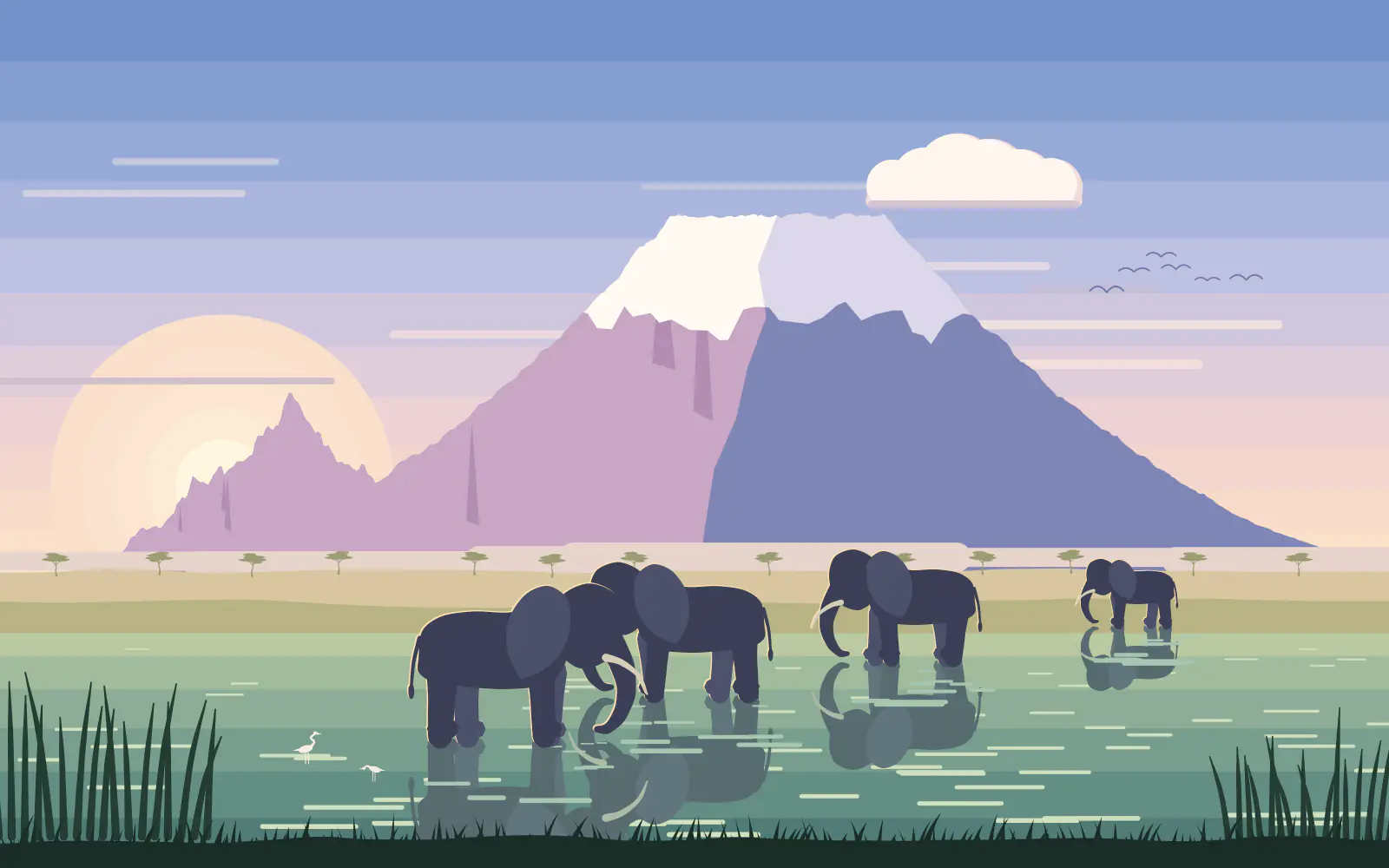
The park is closely associated with its elephants, which have been studied by researchers for decades. The herds are often relaxed around vehicles, which allows long, unhurried observation from a respectful distance, and it is not unusual to watch families wade into the swamps, feed in the shade or cross the plains in a slow procession.
Rain and snowmelt from Kilimanjaro's slopes filter through volcanic rock and reappear in Amboseli as springs and swamps that stay green while the surrounding ground turns pale and dusty. These wetlands draw elephants, buffalo and hippos, and they attract a rich variety of birdlife, including pelicans, herons, cranes and, in suitable conditions, flamingos on the seasonal lake.
Away from the water, the dry lakebed, open grassland and patches of acacia woodland change character through the day. Zebra, wildebeest, giraffe and gazelles share the plains with lions, cheetahs and hyenas, although sightings vary from one day to the next. Observation Hill offers a rare place where visitors can usually step out of the vehicle, where park rules allow, to take in the whole sweep of swamp and plain.
Amboseli is relatively compact, so two nights are enough to cover its main areas and three allow a slower pace and more than one chance at clear mountain views. Most visitors travel by road from Nairobi, a journey of several hours depending on the route, traffic and stops, while others fly to the park's airstrip. The park combines naturally with Tsavo, and our 5-day Amboseli and Tsavo safari shows one way to link the two. Tsavo West is often the nearer neighbour.
The dry season can be dusty, so protect camera equipment and bring a scarf or buff for the drives. Mornings can be cool, then warm up quickly. Our safari packing guide covers clothing and kit.
Some lodges and camps stand inside the park, while others sit on neighbouring Maasai community land, where wildlife moves freely across the boundary. Staying outside the park can bring a quieter setting and sometimes additional activities, but it may add travel time to the main game-viewing areas. When community-owned land is involved, ask how the stay supports the landowners and what rules apply.
The fragile soils and swamps are easily damaged, so keep to marked tracks, never drive across the plains for a better view, and give elephants room, especially at water crossings and when calves are present. Be thoughtful about how many vehicles gather at a single sighting, and ask before photographing people. If you would like to build Amboseli into a longer journey, plan your trip and we will help you shape the route.
Highlights
Places, experiences and details that shape a visit to Amboseli National Park.
On clear mornings and evenings the mountain rises above the plains, though cloud can hide it at any time of year.
The park is known for its elephants, which are often calm around vehicles and can be watched from a respectful distance.
Springs fed by Kilimanjaro keep the swamps green, drawing elephants, buffalo, hippos and a wide range of waterbirds.
A raised viewpoint where visitors can usually step out of the vehicle, rules permitting, to look across swamp, lakebed and plain.
The dry lakebed and short grassland make for far-reaching views and dramatic light, especially at sunrise and sunset.
Neighbouring community areas share the ecosystem, and well-arranged visits can add context about the people who live beside the park.
Things to do
What is possible depends on the season, the area and local rules, so confirm what is available for your dates.
Morning and afternoon drives follow the tracks around the swamps and plains, led by a guide who knows where the elephant families like to feed.
Elephants crossing open ground with the mountain behind them are a favourite subject, and early light is often the most rewarding.
Waterbirds gather around the wetlands, while the plains hold ostriches, bustards, raptors and colourful smaller species.
Climb the hill, where permitted, for a wide overview of the park and a picnic stop away from the vehicle.
Visits to nearby Maasai communities, arranged openly and fairly, can add insight into life beside a national park.
Some lodges and camps arrange outdoor breakfasts or evening drinks in suitable spots, subject to park rules and conditions.
Plan your visit
General guidance to help you plan. Conditions, access and rules change, so confirm current details before you travel.
Amboseli is semi-arid, with a long rainy season in roughly March to May and shorter rains around November and December. The drier months, roughly June to October and January to February, tend to be dustier, and animals gather around the swamps. Cloud often builds around Kilimanjaro during the day in any season, so clearer views are more likely early and late, but they cannot be promised. Rainfall and conditions vary from year to year, so check the latest information with your operator before you travel. Rain can also affect tracks across the dry lakebed.
General seasonal guidance only. Conditions and availability vary from year to year, so ask for current advice before you book.
Amboseli is in southern Kenya and is usually reached by road from Nairobi, a journey of several hours depending on the route, traffic, road conditions and stops. The road can also be used when travelling from the coast or from Tsavo, and some visitors fly to the park's airstrip with a scheduled or chartered service arranged by their operator. Gate arrangements, fees and park rules are set by the Kenya Wildlife Service and can change, so confirm the latest details with your operator or the Kenya Wildlife Service before you travel.
Bring a warm layer for early drives, a scarf or buff for dust, sunglasses and a hat. Keep camera lenses covered when you are not shooting, and carry a blower brush and cloth. Binoculars are helpful for birds and distant wildlife. Do not expect to see Kilimanjaro at a fixed time; be flexible, and look toward the mountain at first light and in the late afternoon. Stay in the vehicle unless your guide says otherwise, and keep your distance from elephants. Ask a doctor or travel clinic about health precautions before you travel, and check what your insurance covers.
Tours
Itineraries that include Amboseli National Park.
Amboseli National Park +1 more
Combine the open landscapes of Amboseli with the varied wilderness of Tsavo on a multi-day safari through two distinctive Kenyan safari regions.
Location
Approximate coordinates, for orientation only. Your operator confirms exact routes and transfers.
Open in maps (OpenStreetMap, opens in a new tab)Travel guides
Practical reading that relates to Amboseli National Park.
Planning your trip 5 min read
Six decisions, taken in a sensible order, turn a vague idea of a safari into a plan: who is travelling, which region, how many nights, how you travel, what to expect and when to book.
Read the guide
Seasons & weather 5 min read
Kenya has no single best month. This guide explains the general pattern of dry and rainy seasons, what each means for wildlife, the coast and the mountain, and how to choose dates with open eyes.
Read the guide
Packing & preparation 5 min read
Pack for the cold, dusty hour before breakfast rather than the warm afternoon. A practical checklist covering bags, clothing, footwear, sun and insect protection, kit, documents, and what to leave at home.
Read the guideFAQs
Short answers to common questions. If yours is not here, just ask.
Often you can see at least part of the mountain, but it cannot be promised. Cloud commonly builds around the summit as the day warms, so the clearest views tend to come at sunrise and in the late afternoon. Even in the drier months the summit may stay hidden for days. Plan your drives so that you look toward the mountain early and late, stay flexible, and enjoy the elephants and landscapes whatever the sky decides to do.
Two nights usually cover the main swamps, plains and viewpoints, and three nights give a slower pace and more than one chance at mountain views. Amboseli is compact, so many travellers combine it with Tsavo, Nairobi or the coast rather than staying longer. The right length depends on your route, how you travel and what else you want to see, so discuss your plans with your operator.
The park's elephant herds have been studied for many years, and the animals are often calm around vehicles, which makes careful observation possible from a respectful distance. Open ground and swamps mean families are easy to follow as they feed and move. As with all wildlife, sightings vary from day to day, and keeping your distance and following your guide's instructions protects both the animals and visitors.
In drier months the plains can be dusty, especially on dust flats and busy tracks. Pack a scarf or buff, sunglasses and a lightweight layer, and keep cameras in sealed bags between photographs. Change lenses sparingly and away from open air. Most lodges can arrange laundry, but darker, practical clothing is easier on dusty days. If you wear contact lenses, bring glasses and eye drops as well.
Keep exploring
Destinations in the same region, or of a similar kind.
Southwest Kenya
Golden grassland, winding rivers and some of East Africa's most celebrated wildlife country.
Southeast Kenya
Red earth, long horizons and the Galana River running through one of Kenya's widest wildernesses.
Southeast Kenya
Volcanic hills, clear springs and rugged scenery on the Kilimanjaro side of Tsavo.
Plan your trip
Tell us when you would like to travel, who is coming and what matters most. We will help you choose between the itineraries above, or shape a different route.

Stay inspired
Travel tips, new itineraries and honest advice for planning Kenya — in your inbox. Unsubscribe whenever you like.
We use essential cookies to make this site work, and optional analytics cookies to improve it.